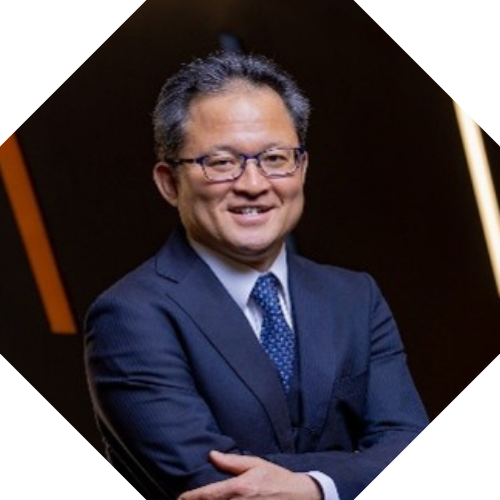
In conversation with Yasu Otake: advancing innovation in biopharma
As precision medicine continues to evolve, translating scientific advances into solutions that can be developed and delivered at scale requires collaboration across research, technology and industry.
Hear directly from Yasu Otake, Corporate Executive, Ajinomoto Co. and General Manager, Bio-Pharma Services Department, Ajinomoto Co., as he shares his perspective on the developments shaping biopharma today and the opportunities ahead.
I see one of the greatest gaps being translating scientific breakthroughs into robust, reproducible manufacturing processes. A promising molecule or therapeutic approach may perform well at research scale but producing it consistently for clinical or commercial use introduces a different set of challenges. Process development, analytical methods, raw material controls and scalability all need to be considered as the science advances. Bringing manufacturing expertise in earlier can help identify those challenges before they become barriers to moving a promising precision medicine forward.
In 2025, the ability to develop a precision medicine when there was no roadmap was demonstrated.
The Baby KJ story demonstrated that rapid design, rapid manufacturing, and rapid regulatory coordination for an individual patient is possible. And its significance extends far beyond rare disease. It shows us that platforms and manufacturing systems can be flexed to meet the needs of any patient. This kind of collaboration exemplifies a model with the potential to reshape how we deliver therapies for millions.
Translating promising research into meaningful outcomes requires different kinds of expertise as the science advances. As a program moves from the lab into development, the focus expands to include considerations such as manufacturability, scalability, and the ability to consistently achieve critical quality attributes. This is where specialized manufacturing expertise and technologies suited to each modality become particularly valuable. In AAV (adeno-associated virus) gene therapy, for example, that can mean assessing plasmid design for manufacturability and producing research-grade material under scalable conditions to understand how a vector will perform. For ADCs (antibody-drug conjugates), site-specific conjugation technologies can provide greater control over attributes such as conjugation site and drug-to-antibody ratio as candidates move toward development. Bringing the right expertise and technologies together at each stage can help create a more seamless path from scientific innovation to manufacturing and ultimately to therapies that can reach patients.
I believe one of the most consequential developments will be the continued evolution and industrialization of manufacturing for precision medicines. We have seen extraordinary advances in the science, including highly individualized approaches such as Baby KJ’s personalized gene-editing therapy mentioned earlier. The next challenge is building manufacturing systems that can support that level of innovation more routinely and at greater scale. Over the next three to five years, I expect advances in automation, analytics, platform technologies and process control to make manufacturing more flexible, consistent, and efficient across increasingly complex precision medicines. Importantly, scale will not always mean producing larger volumes. For some precision medicines, it may mean being able to reliably produce smaller or more individualized batches using well-understood platforms. The impact goes beyond producing existing medicines more efficiently. Advances in manufacturing can change which therapeutic opportunities are feasible in the first place, from larger patient populations to highly individualized treatments.